So now that we are caught up...
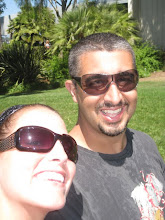
Matt has lost 17 pounds since his last appointment with the nephrologist. We just went to the doctor yesterday and had a pretty decent visit! She's kind of a tough doctor. She scared the crap out of us at Matt's first visit. She just walked in and laid down the law, "you lose 25-50 pounds or you dont have the surgery" and that was that. We left there and all I could think was, "holy shit. Matt and I have been on diets since we met! How are we going to do this?"
So, now that I think about it...Maybe tough doctors are a good thing, because they set you straight...
So she was PSYCHED that Matt had already lost that much weight. She was like "you reeeally want this kidney, don't you?"
They actually lowered one of his blood pressure medications a little because of the weight loss...another plus!
We also found out Matt's blood type. He is type O. Not exactly the best type to have in his situation. O is the universal donor. You can donate to anyone, but you can only recieve from another O.
We are still one step away from Matt getting onto the donor list. He has to go see and get clearance from a cardiologist. We dont have that appointment yet.
Once that appt. is done, we find out if Matt has been accepted into the kidney transplant program at Mass General. He's healthy other than the PKD, so I'm sure he'll be accepted. Once he is accepted, he will be put on the list. I'll talk more about that, when I know more about it!
Tuesday, March 2, 2010

Getting ready for a transplant.
This past summer, Matt's nephrologist said that it was time to begin the transplant process. We originally thought the transplant would be a few years from now, but it turns out that he is only about a year away from it.
We decided to go ahead with the dr's recommendation and do the transplant at Mass General. So we had our first appointment there on December 9th, 2009. It was a very overwhelming day. First, you have to go through an orientation where they educate you on the whole process. Information overload! Then, we met individually with the nephrologist, the surgeon, a transplant coordinator, a financial coordinator, a social worker, and a dietician.
They all gave a brief overview of how things work and what we need to be doing in the meantime. Everything was fine with the financial coordinator, because we have insurance to cover everything. But she needed to make us aware of all the out-of-pocket costs.
The social worker was there to help identify our support network and to talk about any possible stresses that could hinder Matt's condition (is she serious?! This whole experience is stressful!)
The transplant coordinator helps make the whole process run smoothly. They organize all your appointments and let you know what you need to do and when.
The dietician, surgeon, and nephrologist were all a little more eye opening. We went over all the numbers and how important it is for Matt to keep his weight down. The nephrologist said they won't even do the surgery until he loses 25-50 pounds. After the surgery, Matt will be on steroids for the rest of his life that could make him gain weight, so it is necessary for him to lose weight prior to the surgery.
We decided to go ahead with the dr's recommendation and do the transplant at Mass General. So we had our first appointment there on December 9th, 2009. It was a very overwhelming day. First, you have to go through an orientation where they educate you on the whole process. Information overload! Then, we met individually with the nephrologist, the surgeon, a transplant coordinator, a financial coordinator, a social worker, and a dietician.
They all gave a brief overview of how things work and what we need to be doing in the meantime. Everything was fine with the financial coordinator, because we have insurance to cover everything. But she needed to make us aware of all the out-of-pocket costs.
The social worker was there to help identify our support network and to talk about any possible stresses that could hinder Matt's condition (is she serious?! This whole experience is stressful!)
The transplant coordinator helps make the whole process run smoothly. They organize all your appointments and let you know what you need to do and when.
The dietician, surgeon, and nephrologist were all a little more eye opening. We went over all the numbers and how important it is for Matt to keep his weight down. The nephrologist said they won't even do the surgery until he loses 25-50 pounds. After the surgery, Matt will be on steroids for the rest of his life that could make him gain weight, so it is necessary for him to lose weight prior to the surgery.
Monday, March 1, 2010
Welcome
I'm writing this blog about my husband, Matt, and his struggle with polycystic kidney disease. I'm going to try to fill in information about the disease itself, as well as give information to friends, family and acquaintances who would like to stay updated with his situation.
Even though it is now March, Matt's kidney issues started getting bad this past summer, 2009.
Matt will be 33 this May. He was first diagnosed with PKD when he was about 23. His mother, and other family members also had the disease. MaryAnn, Matt's mother, just passed away this past December after a long fight with PKD. The following information about PKD is from http://www.pkdcure.org/:
Polycystic Kidney Disease is the most common genetic, life threatening disease affecting more than 600,000 Americans and an estimated 12.5 million people worldwide - regardless of sex, age, race or ethnic origin. In fact, PKD affects more people than cystic fibrosis, muscular dystrophy, hemophilia, Down syndrome and sickle cell anemia — combined.
Polycystic means multiple cysts. In effect, PKD denotes multiple cysts on each kidney. These cysts grow and multiply over time, also causing the mass of the kidney to increase. Ultimately, the diseased kidney shuts down causing end-stage renal disease for which dialysis and transplantation are the only forms of treatment.
PKD comes in two forms. Autosomal Dominant Polycystic Kidney Disease (ADPKD) is the most common, affecting 1-in-400 to 1-in-500 adults. Autosomal Recessive Polycystic Kidney Disease (ARPKD) is far less common, affecting 1-in-10,000 at a far younger age, including newborns, infants and children.
Matt was diagnosed with the autosomal dominant variety of PKD. That means that there is a fifty percent chance of passing the disease on to each of our kids, Vince and Andre. Once Matt learned he had the disease, he started seeing his nephrologist (kidney doctor) on a regular basis. They did regular blood checks and monitored him over the past 10 years.
The most common problem for kidney disease patients is high blood pressure. Matt has been on blood pressure medication for a long time. He has also has frequent attacks of gout, where his foot just cramps up causing tremendous pain. The doctor checks his creatinine levels in his blood. A normal person's creatinine level is around 1.0. Matt's is now about 4.8. As your kidney function decreases, your creatinine level increases. When your kidney function goes below 20% you start the process of transplantation. If your function drops below 10%, you need to begin dialysis. Matt's kidney function is about 15% right now. So we are beginning the process of getting Matt a new kidney.
Subscribe to:
Posts (Atom)